Bolt-Action or Semi-Automatic: Which First Centerfire Rifle Makes Sense
The first centerfire rifle most people buy is either a bolt-action hunting rifle in a common deer calibre or a semi-automatic AR-15. Both are good rifles. They are good at different things, and the buyer who picks the wrong one for their purpose ends up with a rifle that sits in the safe. This guide sets out what each does well, what each costs to run, where the law treats them differently, and how to decide.
What do you want the rifle to do
Be honest about the answer. If the rifle is for deer, elk or hogs at ranges out to three hundred yards, a bolt-action in a hunting calibre is lighter, more accurate per dollar and legal in every state, including the ones that ban semi-automatic rifles for big game. If the rifle is for the range, for home defence, for varmints and hogs at closer range, or for learning to shoot a rifle well with cheap ammunition, an AR-15 is easier to shoot, faster to reload, endlessly adaptable and cheaper to feed. If you want one rifle for everything, an AR-15 in a hunting-legal chambering is the compromise in most states, and a bolt-action is the compromise in the states that restrict semi-autos.
Bolt-action rifles
A bolt-action is a simple machine: a barrel, a receiver with a bolt you work by hand, a trigger and a stock. That simplicity is why a five-hundred-dollar bolt gun will often out-shoot a fifteen-hundred-dollar semi-auto from a rest. Modern budget bolt rifles from Ruger, Savage, Mossberg, Tikka, Bergara and others shoot inside an inch at a hundred yards with good ammunition, weigh six to seven pounds, and come with a scope base or a scope already mounted. They hold three to five rounds, reload slowly and are quiet in the sense that they make no noise between shots. For a hunter that is all upside.
The costs are speed and ammunition. Hunting cartridges cost a dollar or more a round, so a bolt gun is a rifle you practise with sparingly and sight in carefully. Recoil in the common deer calibres is noticeable but not punishing in a rifle of normal weight.
Semi-automatic rifles
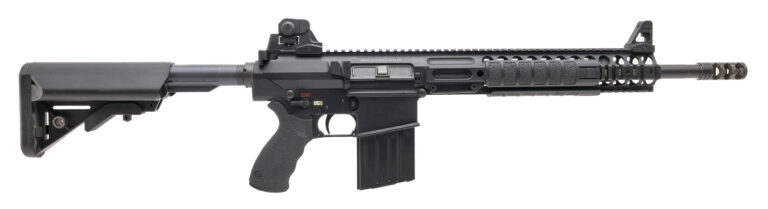
The AR-15 is the most common centerfire rifle in the country for reasons that show up on the first range trip. Recoil in 5.56 is mild, the ergonomics fit almost everyone with an adjustable stock, magazines hold thirty rounds, and practice ammunition is cheap enough to shoot a few hundred rounds in an afternoon. Every part is replaceable and every accessory in the world fits. Accuracy from a decent AR is two inches or better at a hundred yards, which is plenty for anything inside three hundred.
The costs are weight, complexity and law. A complete rifle with an optic and a light weighs eight to nine pounds. It has more parts to understand and clean. And several states restrict it: California, New York, New Jersey, Connecticut, Massachusetts, Maryland, Illinois, Washington, Delaware and Hawaii limit or ban common configurations, and Pennsylvania bans semi-automatic rifles for big-game hunting regardless. Ohio, Iowa, Indiana and southern Michigan restrict deer rifles to straight-walled cartridges, which rules out the standard 5.56 AR for deer there but allows AR-platform rifles in .350 Legend or .450 Bushmaster.
Calibres worth starting with
- Bolt-action for deer and hogs: .308 Winchester, 6.5 Creedmoor or .243 Winchester. All three are accurate, easy to find and easy to shoot; .243 recoils least, .308 hits hardest, 6.5 sits between and shoots flattest.
- Bolt-action for elk and larger game: .30-06, .300 Winchester Magnum or 7mm Remington Magnum, with the recoil to match.
- Semi-automatic for the range and defence: 5.56 NATO, which also fires .223 Remington.
- Semi-automatic where straight-wall rules apply: .350 Legend or .450 Bushmaster.
- Any first rifle for a small or young shooter: a .22 rimfire first, then one of the above.
Cost of ownership
Price the whole rifle, not the receiver. A bolt-action at five hundred dollars with a two-hundred-dollar scope, rings and a sling is a complete hunting rifle for under eight hundred. An AR-15 at seven hundred dollars needs an optic, a light if it is for the house, a sling and a handful of magazines, and lands nearer twelve hundred before ammunition. Then feed it: a hundred rounds of hunting ammunition for the bolt gun costs about as much as five hundred rounds of practice ammunition for the AR, which is one reason AR owners shoot more and shoot better. Neither figure is a reason to buy the other rifle; it is a reason to budget honestly.
Optics
A bolt-action deer rifle wants a three-to-nine or similar variable scope, mounted low and solidly. An AR-15 for the range and home wants a red dot or a low-power variable; for hogs and hunting, a one-to-six or one-to-eight variable. Spend at least a third of the rifle's price on the optic and mount; a cheap scope on a good rifle wastes the rifle.
What to buy with it
A sling, a cleaning kit, a hard case, a hundred rounds of practice ammunition and twenty of the load you will hunt with, and eye and ear protection. For an AR, three or four extra magazines. For a bolt rifle, a bipod or shooting sticks if you hunt open country.
Making the decision
If you will hunt deer and rarely shoot otherwise, buy the bolt-action in .308 or 6.5 Creedmoor. If you will shoot every month and hunt occasionally, buy the AR-15 and add an upper in a hunting calibre later. If you live in a state that restricts semi-automatics, the bolt gun answers the question for you. Either way, the transfer works the same: the rifle ships to the dealer you name and you complete the paperwork there, as the buying guide explains.
Browse bolt-action rifles and AR-15 rifles in the catalogue, and check what your own state allows on the city pages.
General information, not legal advice. Current as of September 2026. Laws change; check the official source before you act.